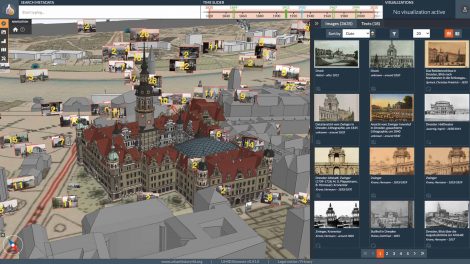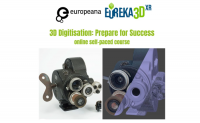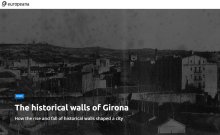
Developed by the UrbanHistory4D project and hosted Europeana Academy, the 4D Browser course is designed to introduce new users to the 4D Browser – an innovative tool that lets user explore historically reconstructed 3D cityscapes across time.
The course can be taken by history enthusiast, cultural heritage professionals, educators and researchers, urban planners and whoever might be curious to explore the transformation of a city through time.
By the end of the course, users will have acquired key skills such as:
Understanding the core features and functions of the 4D Browser;
Navigating and interacting with 3D city models;
Accessing and analysing georeferenced historical photos;
Using the time slider feature to explore urban transformation.
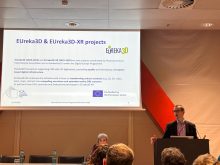
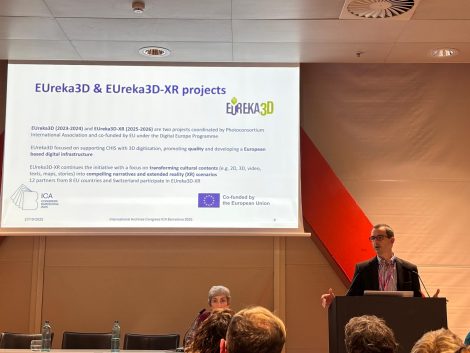
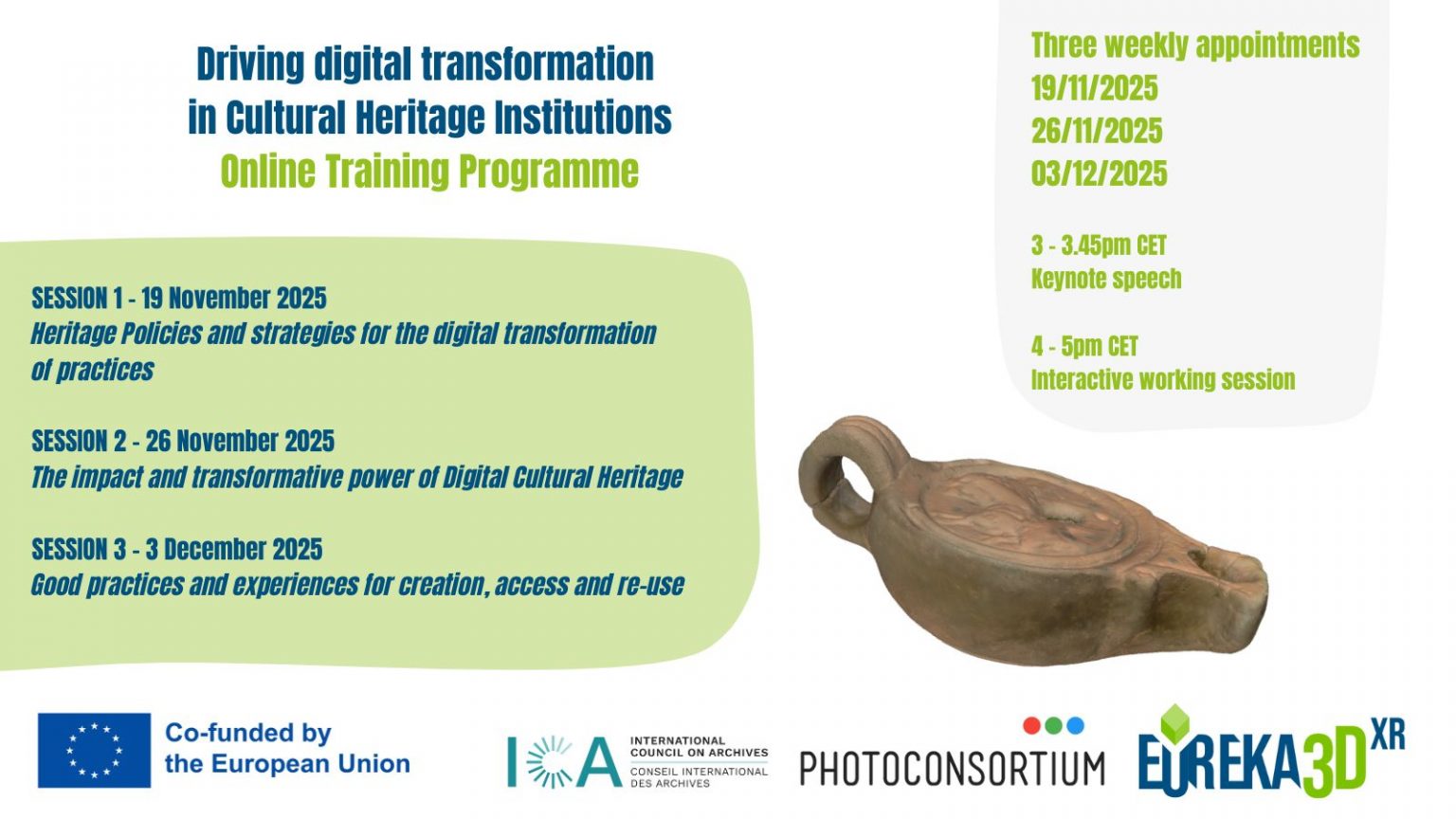
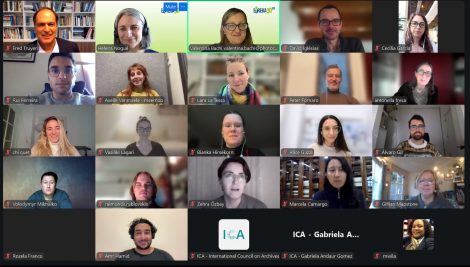
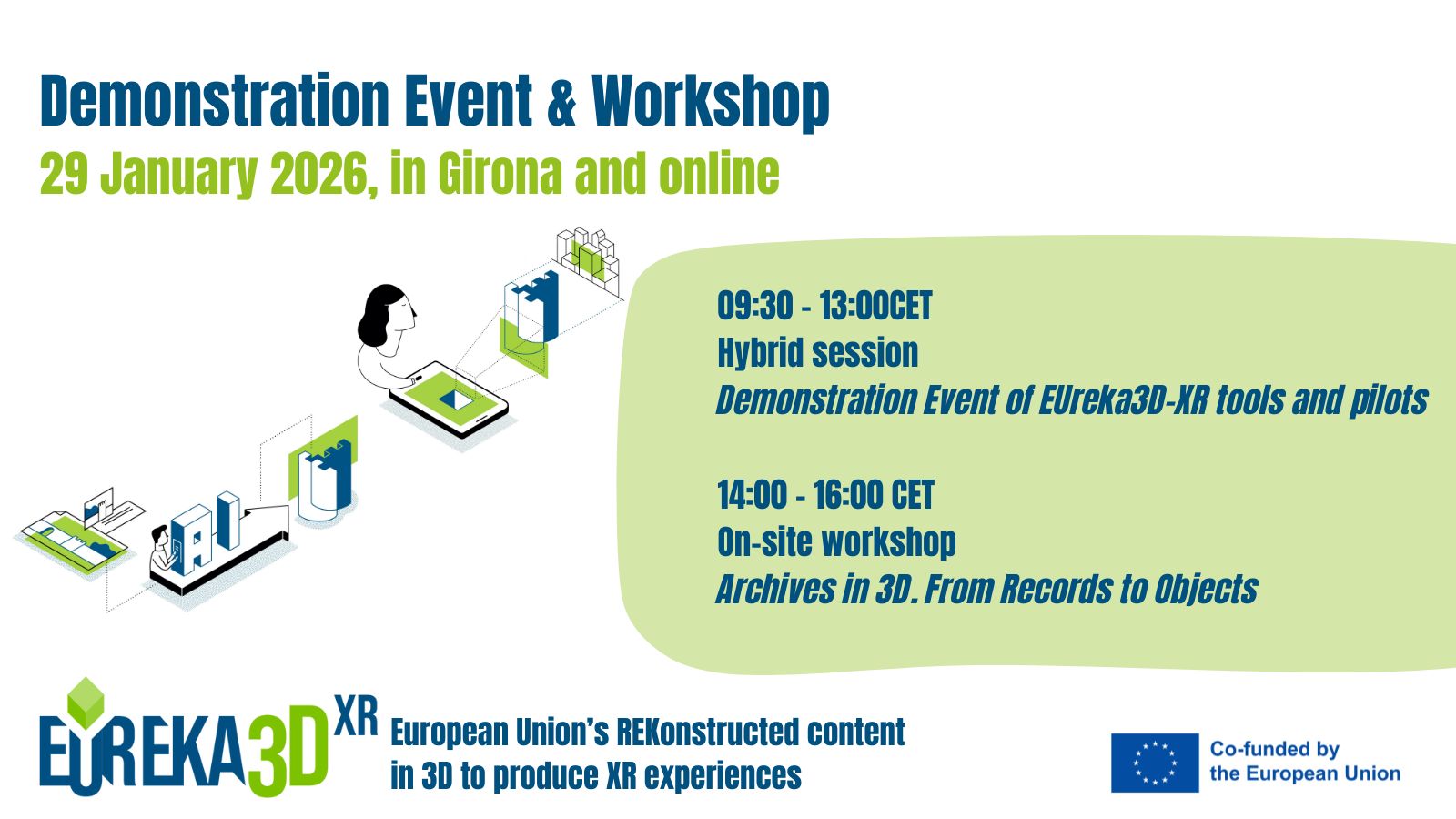
After three appointments, open keynote speeches and interactive working sessions where 30 learners were selected to join the full programme, the 2025 Online Training Programme “Driving Digital Transformation in Cultural Heritage Institutions” (organized by EUreka3D‑XR Project in collaboration with the International Council on Archives (ICA) and Photoconsortium), came to an end.
The event was a great success, with over 80 participants in every session and plenty of views on the Youtube livestreams, that are still available (links below) for those who want to dive back into the or fully immerse themselves for the first time to further inspire and support continued learning and reflection around the topic. Moreover, the participants to the interactive part hosted by Peter Fornaro (University of Basel) had a productive and fruitful session, and will receive a certificate for their activity.
Programme and livestreams
Wednesday, 19 Nov 2025 h. 15:00–17:00 CET
“Heritage Policies and Strategies for the Digital Transformation of Practices”
Keynote by Antonella Fresa – The session will explore European policies, strategic visions and infrastructures underlying digital cultural heritage Live streaming: https://www.youtube.com/watch?v=r_f3GCcFGKI
Wednesday, 26 Nov 2025 h. 15:00–17:00 CET
“The Impact and Transformative Power of Digital Cultural Heritage”
Keynotes by Fred Truyen (KU Leuven) & David Iglésias Franch (CRDI – Ajuntament de Girona) – Focus on case-studies and the practical and societal implications of digital heritage innovation Live streaming: https://www.youtube.com/watch?v=BhqL4n2GvJ0
Wednesday, 3 Dec 2025 h. 15:00–17:00 CET
“Good Practices and Experiences for Creation, Access and Re-use”
Keynotes by Frederik Temmermans (VUB – imec) & Eirini Kaldeli (NTUA) – A co-creation interactive session based on use-case scenarios for creation, access and re-use of cultural assets Live streaming: https://www.youtube.com/watch?v=ObuhHUDxzVk
About the Programme
The 2025 Online Training Programme builds on the previous webinar series organised in 2023–2024 and seeks to provide cultural heritage professionals with advanced knowledge and applied methodologies in digital transformation.
Through this initiative ICA, EUreka3D-XR and Photoconsortium aim to support heritage institutions in addressing policy implications, strategic frameworks, practice-based innovation and reuse of digital cultural heritage.
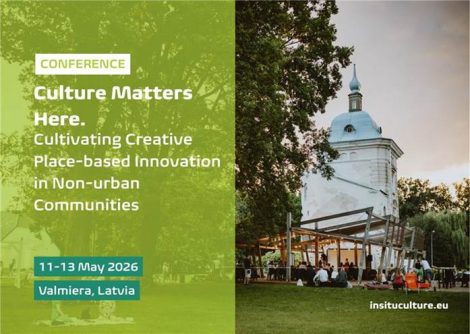
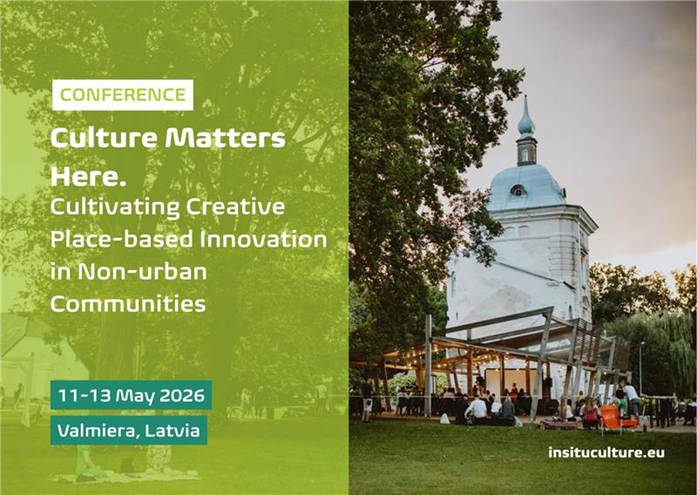
IN SITU: Place-based innovation of cultural and creative industries in non-urban areas Project organises a Final conference (Valmiera, 11-13 May 2026), “Culture Matters Here. Cultivating Creative Place-based Innovation in Non-urban Communities”
For the upcoming Final ConferenceIN SITU Project invites scholars, researchers, artists, cultural practitioners, activists, policymakers, and decision-makers from across the world and a wide variety of disciplines to submit proposals for presentations of papers and projects. We welcome participation by the large community of the European Rural Pact, including the Community Group on Culture and Creativity in Rural Areas. A special geographical focus will be placed on innovative and sustainable cultural and creative practices in remote areas and peripheral corners of Europe.
All submissions should offer an original contribution to the vital topic of place-based innovation and the transformative power of the creative and cultural sector in forging more inclusive, resilient, and sustainable communities in rural and non-urban areas. We will also share key insights from our research, highlight project results, and look ahead to future plans.
Additionally, the event will host the premiere of the IN SITU documentary, offering an inside look at our Labs and case studies.
R-MAP is the acronym of the project titled Mapping, understanding, assessing and predicting the effects of remote working arrangements in urban and rural areas.
R-Map is a three-year project funded by the European Union under the Horizon Europe Programme, started on 2024. It brings together 12 dedicated partners from across Europe. Its mission is to study comprehesively the urban-rural gap and to address how it is influenced by remote work.
R-Map’s approach includes cross-regional dialogues and policy roundtables to ensure that the findings and recommendations are applicable across diverse regions in Europe and beyond. By understanding and shaping the trends related to remote work, R-Map aims to create environments suitable for both urban and rural settings.
By using state-of-the-art research methods and working closely with stakeholders, the project’s mission is to provide data-driven solutions and tackle the ongoing challenge of bridging the urban-rural gap, recognizing the influence of remote work on social, spatial, economic and environmental aspects.
The public deliverables of R.MAP, including its first Policy Brief can be accessed at the following link: https://r-map.eu/deliverables/
We look forward to share in the SECreTOUR Network further news from R.MAP.
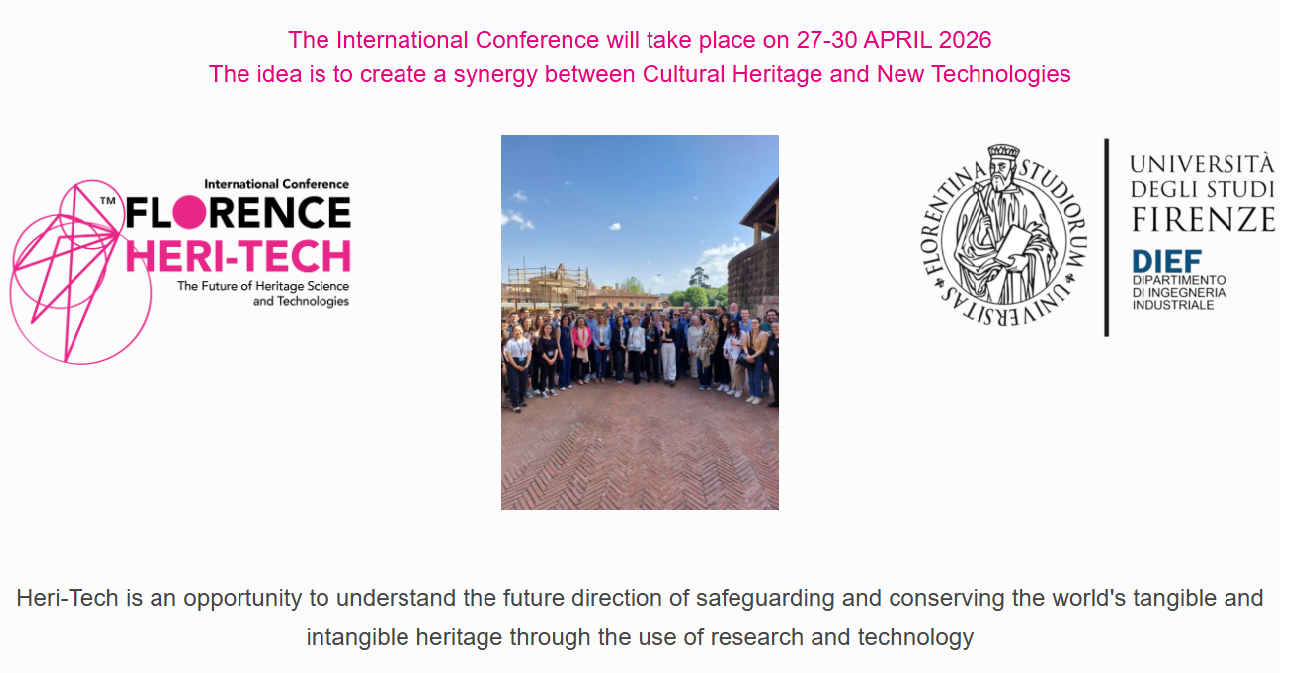
The International Conference Florence Heri-Tech: The Future of Cultural Heritage Science and Technology, born in 2018 from an idea of the DIEF (Department of Industrial Engineering of University of Florence) and Florence Biennal Art and Restoration Fair, brings together a large number of researchers and scholars from around the world and highlights the current state of the field, particularly the relationship and opportunities between innovative scientific techniques and technologies used to safeguard cultural heritage.
The event aims to:
Promote international mobility and cooperation among students and staff in the fields of science, art, and cultural heritage
Enhance the development of a multicultural society and encourage the concept that scientific and cultural research must be an integral part of society
Promote international networks between universities, educational institutions, and businesses to create opportunities for long-term collaboration
Establish contacts and cooperation between academic institutions and create favorable conditions for young graduates to enter the workforce
Demonstrate how new technologies in the arts can be used for innovative teaching and learning to create a synergy between business world and university world.
For next year’s conference, a Call for Paper was announced to compile and publish a scientific dissemination of the conference proceeding. The deadline to submit the first draft paper is January 11, 2026.

Read the call and learn the guidelines to correctly submit your proposal at this link.

HAEU's workshop to manage climate threats in the field of achiving (4-5 December 2025)
The new challenges that archives face today concern their relationship with space and the environment, a balance that is increasingly fragile and exposed to risk: floods, fires, and climate change are reshaping the risk profile of documentary heritage.
The workshop organized by the Historical Archives of the European Union, Disaster Management and Climate Change in Archives, brings together experts from the sectors of cultural heritage preservation, risk management, and sustainability to examine the contemporary risk profile of heritage organisations and strategies to address it. The workshop will take place December 4-5, 2025 both online and on site.
IN SITU: Place-based innovation of cultural and creative industries in non-urban areas Project organises a Final conference (Valmiera, 11-13 May 2026), “Culture Matters Here. Cultivating Creative Place-based Innovation in Non-urban Communities”
For the upcoming Final ConferenceIN SITU project invites scholars, researchers, artists, cultural practitioners, activists, policymakers, and decision-makers from across the world and a wide variety of disciplines to submit proposals for presentations of papers and projects. We welcome participation by the large community of the European Rural Pact, including the Community Group on Culture and Creativity in Rural Areas. A special geographical focus will be placed on innovative and sustainable cultural and creative practices in remote areas and peripheral corners of Europe.
All submissions should offer an original contribution to the vital topic of place-based innovation and the transformative power of the creative and cultural sector in forging more inclusive, resilient, and sustainable communities in rural and non-urban areas. We will also share key insights from our research, highlight project results, and look ahead to future plans. Additionally, the event will host the premiere of the IN SITU documentary, offering an inside look at our Labs and case studies.
Two certainties run through our existence: death, and the presence of the Fibonacci sequence in everything around us. Leonardo Fibonacci from Pisa gave the world a mathematical principle that forever reshaped how we read nature, form and growth. Why this sequence — and its golden offspring, PHI — matters so deeply is a question that has occupied centuries of study, but this article looks elsewhere: at what Fibonacci’s thought has generated within the visual arts, and how it continues to offer an unexpected bridge between distant cultures.
For far too long, we’ve opposed rationality and emotion, science and poetry, reducing art to a domain detached from mathematics. This romanticised divide has obscured entire artistic genealogies built precisely on order, proportion, optics and geometry. From the Renaissance to the twentieth-century avant-gardes, from kinetic experiments to perceptual research, scientific rigour has never been alien to creativity — it has simply been pushed to the margins of mainstream narrative.
Today those margins no longer exist. Digital art, transmedial practices and the rise of Artificial Intelligence have turned mathematics into an everyday language of contemporary creation. Computational tools, once the territory of specialists, are now accessible to anyone with an idea and a piece of software. The result is a moment in which visual traditions overlap without clashing, finding in mathematics a shared, global ground that anyone can read.
The Fibonacci sequence is everywhere: in flowers, in urban patterns, in biological systems, in human-made structures. Its ubiquity led me to imagine a show that would truly test its universal character — inviting artists from distant backgrounds to confront the same primordial structure. To celebrate Fibonacci Day in Pisa, I selected several international artists, including two from China — a choice that may seem unusual in a West that still perceives China as distant from contemporary artistic and technological culture. The truth is that we know very little about China’s current art scene, and what we do know is often filtered through outdated ideas.
It is in this perceptual void that the work of Zhang Nan and Duan Yike emerges — two artists who approached Fibonacci from radically different traditions, imaginaries and conceptual frameworks.
Zhang Nan’s Form Beyond Boundaries demonstrates how the golden spiral transcends any cultural ownership. It is not a citation but a narrative detonator. The spiral contracts into a primordial core, then bursts into geometric fragments advancing with a precise, almost musical rhythm. On one side it recalls Western traditions of proportion; on the other it resonates with Eastern notions of balance and generative forces. As the sequence progresses, the form collapses and regenerates, shifting from material to immaterial states: the mathematics remains, but transforms, like a living principle. The work merges geometry and philosophy, perception and metaphysics — revealing what it truly means to conceive art as a global territory.
Duan Yike’s The Spiral of Timeless Murals begins instead with the Dunhuang mural motifs, reinterpreting them through cyclical structures, proportions and spirals aligned with Fibonacci logic. Time is no longer linear: it becomes movement, return, stratification. Mathematics serves not as ornament but as the conceptual scaffolding that allows tradition to be reconstructed and transformed through digital patterns. Dunhuang is not “modernised”: it is read as a complex, natural system built on the same principles that govern growth and universal harmony. The work becomes a bridge between eras, technologies and cultures, reaffirming that what repeats in nature also repeats in human imagination.
From these works emerges a China the West rarely sees: not a monolithic ideology, but an artistic scene capable of engaging with universal codes with striking clarity. A China that knows its past but refuses to be constrained by it; that reads Fibonacci not as a borrowed tool but as a framework to rethink itself. A China that experiments, interprets and innovates.
And if this exhibition offers one lesson, it is straightforward: when you work with structures that belong to everyone — spirals, proportions, cycles, algorithms — the distinction between “centre” and “periphery” collapses. China stops being an elsewhere to decode and becomes a central actor, fully embedded in the global conversation. Fibonacci, once again, reminds us that growth is never linear: it arrives from unexpected directions, opens lateral paths, overturns inherited assumptions.
This is the China you don’t expect. And one we should finally start looking at for what it truly is.
On 25 and 26 November, it will be possible to follow SEMIC 2025 remotely and be part of the European Commission’s flagship event on semantic interoperability and digital government, organised in partnership with the Danish Presidency of the Council of the EU.
With the theme “Interoperability for Impact,” SEMIC 2025 will explore how shared data, semantics, AI and governance models can turn policy goals into concrete benefits for citizens, businesses and administrations.
By registering for the live stream, participants will be able to:
Follow the technical workshops on 25 November, including sessions on semantics in data spaces, AI for digital ready policymaking and real-world cross border use cases.
Watch the main conference on 26 November, featuring high level discussions on harmonised standards, digital sovereignty, the evolution of the European Interoperability Framework (EIF), our Public Sector Tech Watch’s Awards ceremony and more.
Get inspired by concrete examples and strategies that support a more open, interoperable and digital public sector in Europe!
Register now and become part of the European Commission’s flagship event on semantics, interoperability, and digital government!
IN SITU Final Conference, Valmiera, Latvia, from 11-13 May 2026
Extended deadline: The deadline for the Call for Papers for the Special Issue Proposal in the International Journal of Cultural Policy has been extended to 15 December 2025.
The conference will be a dynamic forum for exploring cutting-edge research and practices in place-based innovation and creativity of the cultural and creative industries (CCIs) in non-urban areas.
Because of the focus on innovative and sustainable cultural and creative practices in remote areas and peripheral corners of Europe, the themes addressed in the conference resonate many of the subjects that are studied in SECreTOUR project.
The IN SITU project invites proposals for presentations of papers and projects from a diverse range of individuals, including scholars, researchers, artists, cultural practitioners, activists, policymakers and decision-makers from across the world and a broad range of disciplines.
The deadline for submitting proposals of presentations has been extended to 15 December 2025. The submission is expected to be delivered online through the e-form made available on the IN SITU website.
The presentations are expected to demonstrate the transformative power of the creative and cultural sector in forging more equitable and sustainable communities in rural and non-urban areas by:
Strengthening cultural and creative practice and place-based innovation
Fostering cross-sectoral collaboration and partnerships for local benefit
Advancing planning and policy frameworks for creative work in non-urban areas
We are expecting that the outcomes of the Conference will provide relevant insights in the research conducted by SECreTOUR.
SECreTOUR is a research and innovation action funded under the Horizon Europe Programme of the EU.
Build with Bits (BwB) is an international online experience, where participants learn how to create virtual environments that generate a positive impact on local issues related to digital culture, education, and this year, we will have a special focus on sustainable … Continue reading →
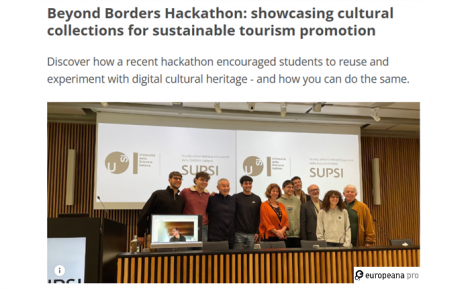
The SECreTOUR initiatives named Beyond Borders run successfully from 22 to 25 October 2025. On the first day (22/10/2025), the partners of SECreTOUR met with representives of the sister projects that participate in the Cluster: CULTURALITY, CROCUS and TOURAL to … Continue reading →
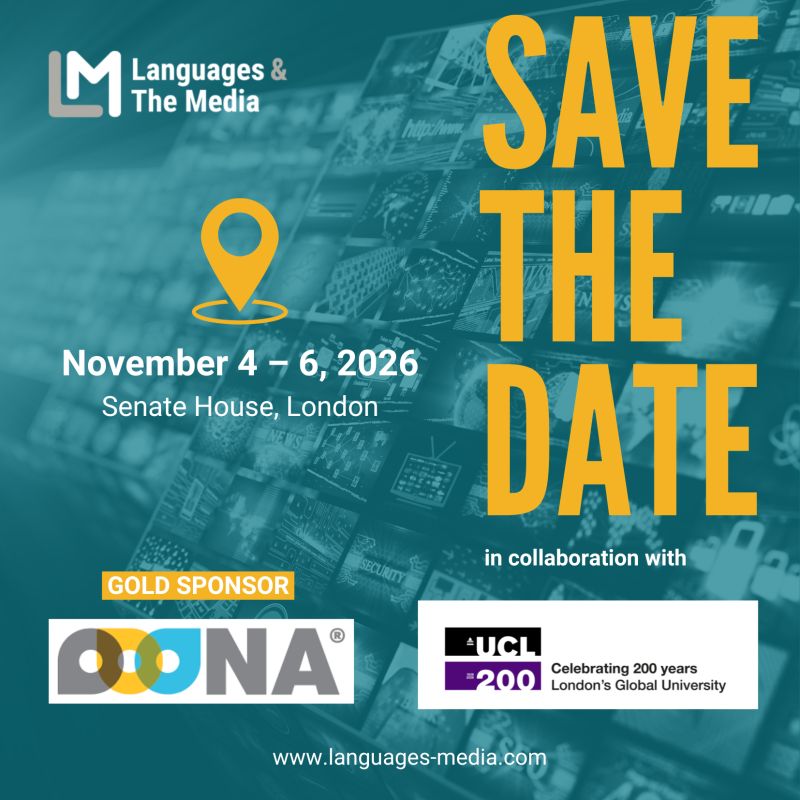
Languages & The Media, the Biennial International Conference on Audiovisual Language Transfer in the Media, is gearing up for its 16th edition, scheduled from November 4 to 6, 2026, at Senate House, University of London, UK. Under the theme Moving … Continue reading →
Open call to museums, research insitutions, GLAMs and more to make use of 3D cultural heritage assets and promote digital innovation.
The 3DBigDataSpace – Outreach Synergy Call offers a unique opportunity for museums and cultural heritage institutions to develop innovative public applications using 3D technologies. Two selected projects will each receive €10,000 to realise their concepts, along with technical guidance from … Continue reading →
As part of Springer Series on Cultural Computing (SSCC)
Following the editorial project that called for book chapters back in March 2024, the book Endangered Heritage Sites: Enhanced Representations for Informed Solutions has been published as part of Springer Series on Cultural Computing (SSCC). The book explores three key … Continue reading →
This website uses cookies to improve your experience. We'll assume you're ok with this, but you can opt-out if you wish. Cookie settingsAccept All
Privacy & Cookies Policy
Privacy Overview
This website uses cookies to improve your experience while you navigate through the website. Out of these, the cookies that are categorized as necessary are stored on your browser as they are essential for the working of basic functionalities of the website. We also use third-party cookies that help us analyze and understand how you use this website. These cookies will be stored in your browser only with your consent. You also have the option to opt-out of these cookies. But opting out of some of these cookies may affect your browsing experience.
Necessary cookies are absolutely essential for the website to function properly. This category only includes cookies that ensures basic functionalities and security features of the website. These cookies do not store any personal information.
Any cookies that may not be particularly necessary for the website to function and is used specifically to collect user personal data via analytics, ads, other embedded contents are termed as non-necessary cookies. It is mandatory to procure user consent prior to running these cookies on your website.