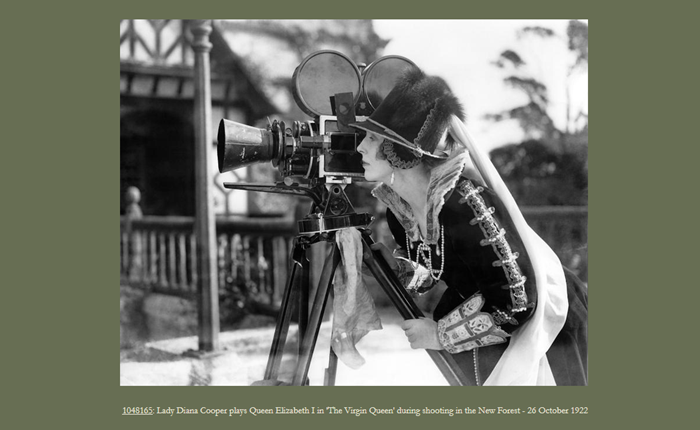

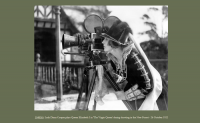
To mark the 2026 World Day for Audiovisual Heritage, prestigious British Archive TopFoto has organised an online event, “Topfoto: Past, Present and Future of Press Photography” online on Octber 27th. The event will explore how press photographs move from newsroom … Continue reading
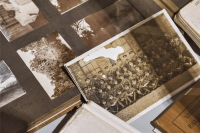
In the context of small support project CHERISH, Photoconsortium along with CEPIC, developed their first online survey to collect a wide feedback on existing digital challenges in EU for the image professionals. The survey takes approximately 15 minutes to complete, … Continue reading
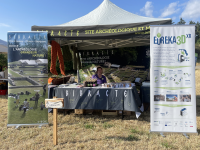
What if the visible remains of a place are only a tiny part of its story? With this blogpost, written by EUreka3D-XR’s partner Bibracte EPCC, you can discover how augmented reality, combined with complementary digital resources, reveals the many hidden … Continue reading
Area: digital heritage
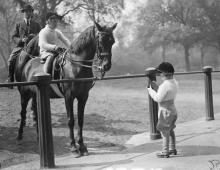
Photography is both a means of personal expression and a witness of present and past days: therefore it’s about cultural heritage and about creativity, and it is a wealth of possibilities for experimentations. Europeana Photography and Europeana Space are two projects strictly linked one to the other on this topic. Continue reading
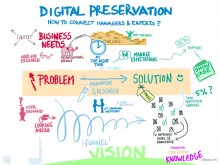
PREFORMA project has been hosted in the DCH-RP stall at the workshop on digital preservation sustainability on the EU policy level organised in London in the frame of the JCLD/TPDL 2014 Conference. Continue reading

Janine Prins of WAAG Society retraces her experience as anthropologist and announces the RICHES co-creation sessions. Continue reading
On 9 September 2014, Net4Society published an article on its website announcing the first International Conference of the RICHES Project, being held in Pisa, at the Museum of Graphics of Palazzo Lanfranchi, on 4-5 December 2014. NET4SOCIETY is the International Network of National Contact Points for the Societal Challenge 6 and Socio-economic Sciences and Humanities in Horizon 2020. Continue reading
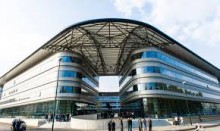
On 25-26 September, in Turin, at Einaudi Campus it will be held the national conference “Italy is Culture” organised by AICI (Association of Italian Cultural Institutions). The conference aims to give a strong signal about the potential of Italian culture and cultural institutions, which are undergoing a positive process of transformation and renewal: Italian culture has a strong vocation to social and technological innovation, to communicational experimentation, to internationalisation. Continue reading

The company works primarily with Dance Theatre, with a constant enthusiasm for fusing artistic disciplines and indulging in vibrant aesthetics. They supported the dance Pilot of Europeana Space. Images credit: The Camera Club, London and Foteini Christofilopoulou Continue reading

MemorySharing is a project which aims to create a new way for increasing the value of a community’s memories and private documents, by combining web technologies, scientific accuracy and creative approach in the multimedia sharing/telling of contents. Its main objective is to connect generations, actively engaging aged and young people. MemorySharing is a project by the cultural association Acquario della Memoria, whose essential aim is to experiment effective and innovative ways of transmitting the value of past’s memories. Continue reading

The main task of Digisam is promoting the achievement of the objectives of the Swedish national strategy for digitisation, but among its activities one key focus is on international dissemination. The latest release in English is about guiding principles for working with digital cultural heritage and for enabling effective cooperation regarding digitisation and its related processes. Continue reading

Media & Learning 2014 is dedicated to the latest developments, services and uses of media in education and training. Aimed at both policy makers and practitioners, the purpose of this annual event, organized by the Flemish Ministry of Education, is to … Continue reading
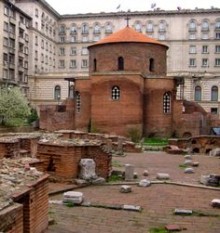
Invisible Serdica is a mobile app that reveals objects of historical significance in the ancient city of Serdica, situated at the present location of the Bulgarian capital (Sofia). This tool enables you to get a realistic insight into some of the places, now hidden under the ground, emphasises on some of the unknown cultural aspects related to them by granting access to the especially edited multimedia tales and legends, curious stories and bibliographic data to various sources found in the NALIS Union Catalogue (NALIS UC). In this way, the historical significance of the object is revealed together with its relation to emblematic figures and events. Continue reading