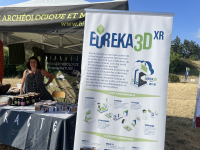

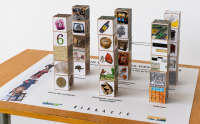
Developed by project partner Bibracte in the context of EUreka3D-XR, two Open Educational Resources (OER) on XR technologies and cultural heritage: “On the Shoulders of the Celts – How yesterday’s inventions have made today’s digital world possible“, a step-by-step guidance … Continue reading

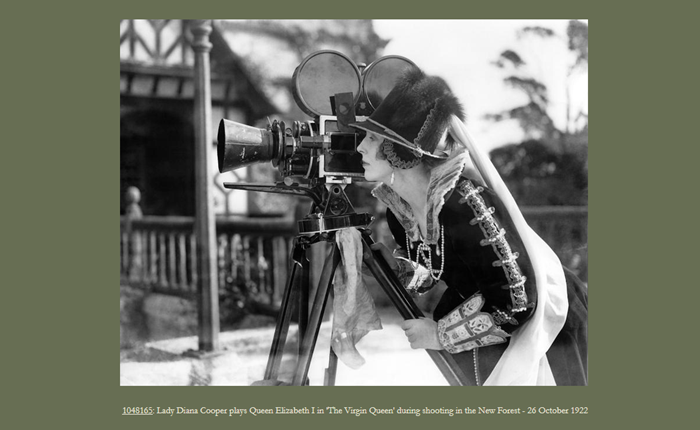
Paper for the 19th Image and Research Conference in Girona, 19-20 November 2026. Abstract Historical photographic archives contain considerably more information than the comparatively small number of images traditionally selected for digitisation and publication. United Archives is therefore developing a … Continue reading
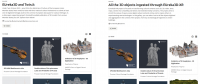
Starting today, it is possible to explore every single object that has been ingested on Europeana through EUreka3D-XR project. Produced by project coordinator Photoconsortium, two new galleries are now available on Europeana: one where all the 3D digitised, reconstructed and … Continue reading
Area: digital heritage
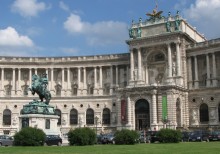
An overview on management aspects such as digital rights management, policies and costs as well as technical aspects with a focus on preservation planning and scalability in digital preservation will be given. Insights into the day-to-day practice of digital preservation will foster the understanding of theoretical concepts developed in the two EU funded projects. Continue reading
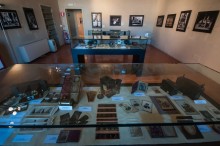
The great exhibition of early photography opened on Friday 11th April. The Museum of Graphics in Palazzo Lanfranchi hosted international guests from all over Europe to celebrate the ribbon cutting, and to unveil the photographic masterpieces which are in the exhibition. “All Our Yesterdays: Life Through the Lens of Europe’s First Photographers (1839 – 1939)”, in Pisa, 11th April – 2nd June 2014 Continue reading
The main objective of the cooperation is to evaluate the possibility to reuse data made available by OPENAIRE in the Proof-of-Concepts organised by DCH-RP targeted at demonstrating how e-Infrastructures can be of benefit for the DCH community, in particular for the preservation of digital cultural content. Continue reading

The project Cultural Heritage Counts for Europe will gather, analyze, consolidate and widely disseminate the existing data on the impact of cultural heritage – i.e. the impact on the social, economic, cultural as well as environmental. It will result in a European mapping of both qualitative and quantitative evidence-based research carried out at the European, national, regional, local and/or sectorial levels. Continue reading

Welcome to the March edition of the EUDAT News Bulletin! These short email bulletins are prepared monthly to keep the community updated about the latest news and developments from EUDAT. Continue reading
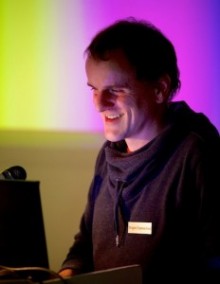
After an international search, leading digital preservation specialist, artist and musician, Dragan Espenschied has been appointed to lead Rhizome’s growing and award-winning Digital Conservation program. Trevor Owens, Digital Archivist with the National Digital Information Infrastructure and Preservation Program (NDIIPP) in the Office of Strategic Initiatives at the U.S. Library of Congress, interviews Dragan about his new role. Continue reading

We are happy to announce that PREFORMA call for tender Prior Information Notice has been published on the Tender Electronic Daily (TED), the Internet version of the Supplement to the Official Journal of the European Communities. Continue reading

ICRI 2014 offered a high level international forum where key stakeholders could meet, discuss and contribute to bringing forward global issues related to Research Infrastructures. Co-organised by the European Commission and the Greek EU Presidency of the European Union, it … Continue reading
A Memorandum of Understanding has been signed to formalise the fruitful cooperation started in the past months between the two projects funded by the European Commission, with the aim to set-up of a Proof-of-Concept in DCH-RP, based on the work and prototypes developed in APARSEN, and to develop a common registry of services and tools focused on digital preservation. Continue reading
After the successful workshops and networking sessions jointly organised by DCH-RP and SCAPE, the two projects are now planning the next joint activities, such as the possibility to set-up of a Proof-of-Concept in DCH-RP based on the work and prototypes developed in SCAPE and the organisation of other joint events. Continue reading