
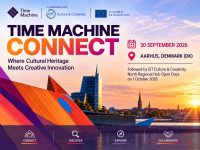
Time Machine Connect 2026 (September 30, Aarhus) brings together the Time Machine Organisation (TMO) and EIT Culture & Creativity communities in Aarhus to explore how cultural heritage data, digital technologies and creative expertise can come together to create new opportunities … Continue reading
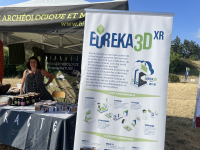
This Gallic archaeology festival takes place every year at the Gergovie oppidum, the very place where the Gauls famously resisted the Roman invaders. Around 300 people visited the Bibracte stand, where they could discover the EUreka3D-XR project. Nearly 150 visitors … Continue reading

EUreka3D-XR project’s partner Bibracte has organized an onsite workshop focused on the AR Tour Experience tool developed within the project: Bibracte is inviting heritage, tourism or education professionals that want to enrich the experience of their audiences with immersive technologies. … Continue reading
Area: digital heritage

The AIUCD (Associazione Italiana per l’Informatica Umanistica e la Cultura Digitale) annual conference, devoted to any aspect of the digital humanities, was held in Padua on 11-12 December 2013. Continue reading

IRCDL is a yearly conference for Italian researchers on Digital Libraries related topics. The aim of IRCDL 2014 is once more to provide the opportunity to explore new ideas, techniques and tools and to exchange experiences also from on-going projects. Continue reading
The session, organised by DCH-RP, SCIDIPES, APARSEN, EUDAT, CHAIN REDS and SCAPE, brought together projects and initiatives working world-wide in the domain of DCH, digital arts, digital performances, digital humanities and digital preservation to find synergies and discuss opportunities for cooperation, in particular around the theme of using e-infrastructures for the preservation of DCH. Continue reading

First International Scientific and Practical Seminar DIGITIZED HERITAGE: PRESERVATION, ACCESS, REPRESENTATION Preservation and use of digital collections of photographic documents November 25-26, 2013 State Polytechnic Museum (NTUU “KPI”) held a scientific and practical seminar, the first in a series of informational … Continue reading
EAGLE consortium recently met in Pisa for discussing and proceeding towards the project’s next steps. Next appointments for the EAGLE project are on the 18-20 February 2014, in Ljubljana, joining the Plenary Meeting with Workshops, Training, and a Public Event. Still to be confirmed as for dates and venues, the first EAGLE International Conference will also take place in early autumn 2014. Continue reading
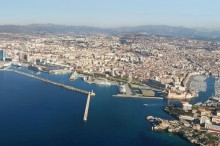
Over 13 Conferences, Symposia, Workshops and Exhibitions under one roof. In the 2013 European Capital of Culture, Marseille, this fall will have place the world’s largest gathering ever focused on Digital Heritage. A federated event of the leading scientific meetings in information technology for heritage… Continue reading
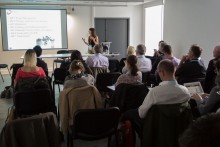
Sofie Taes of KU Leuven gave a presentation of EuropeanaPhotography during the panel session of EU projects at Digital Heritage 2013. The workshop took place on the 29th October and included representatives of several EU projects, who delivered interesting speeches. It was an occasion to discuss and present the project to colleagues, experts and professionals in the cultural heritage, to foster reciprocal awareness and cooperation. Continue reading
This is a standard-based web 2.0 demonstrative platform that enables search in parallel in different online repositories of linked data. The users can search across the tens of millions of resources contained in the CHAIN-REDS Knowledge Base as well as in the Europeana, Cultura Italia and Isidore repositories. The service is available both in a web-based version and with a mobile app. Continue reading

A joint CHAIN-REDS and eI4Africa Workshop was organised under the aegis of the European Commission and in co-location with big event UbuntuNet Connect 2013. The event took place on November 13 in Kigali, Rwanda Continue reading

The main themes about “Infrastructures in the Digital Age: the Data Challenge” and “e-Infrastructure commons” were discussed in two tracks, including speeches by very important and international experts. The workshop organized by e-IRG was held under the Lithuanian EU Presidency of the European Union. Continue reading