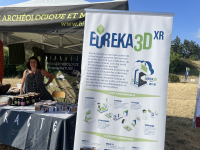

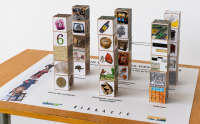
Developed by project partner Bibracte in the context of EUreka3D-XR, two Open Educational Resources (OER) on XR technologies and cultural heritage: “On the Shoulders of the Celts – How yesterday’s inventions have made today’s digital world possible“, a step-by-step guidance … Continue reading

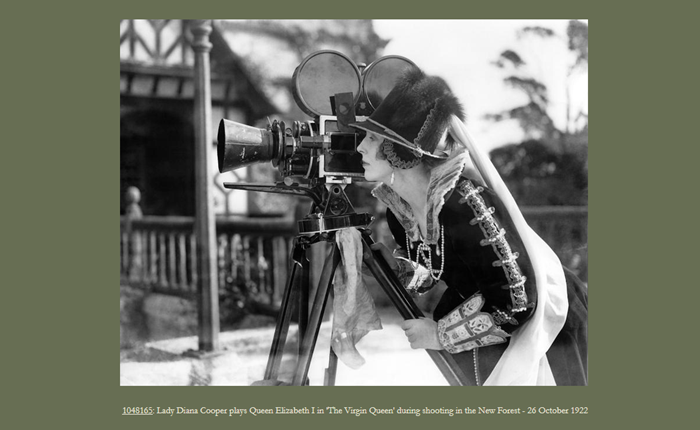
Paper for the 19th Image and Research Conference in Girona, 19-20 November 2026. Abstract Historical photographic archives contain considerably more information than the comparatively small number of images traditionally selected for digitisation and publication. United Archives is therefore developing a … Continue reading

Starting today, it is possible to explore every single object that has been ingested on Europeana through EUreka3D-XR project. Produced by project coordinator Photoconsortium, two new galleries are now available on Europeana: one where all the 3D digitised, reconstructed and … Continue reading
Area: digital heritage
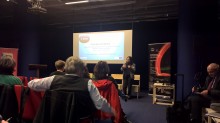
This workshop is the first celebration of the work Europeana Space project is doing in the domain of Education. During this workshop, current best practices for environments/applications to facilitate re-use of digital cultural heritage content in an educational context were examined. ‘Education’ here … Continue reading

Applications are invited from candidates who possess the necessary qualifications in order to fill one (1) full time Marie Curie Early Stage Researcher (ESR) Fellow Position in the Digital Heritage Research Lab of the Cyprus University of Technology (CUT) in … Continue reading
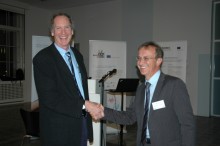
During the International Conference “Digital Heritage and Innovation, Engagement and Identity”, held in Berlin on 12-13 November 2015, the partners of CIVIC EPISTEMOLOGIES (www.civic-epistemologies.eu) and RICHES (www.riches-project.eu) projects proposed the adoption of the Berlin Charter, a set of principles for encouraging … Continue reading
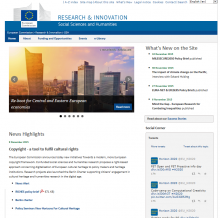
In the EC website of Research and Innovation, at the section of Social Science and Humanities, the latest outcomes of Riches project were just published: http://ec.europa.eu/research/social-sciences/index.cfm The European Commission announces today new initiatives Towards a modern, more European copyright framework. … Continue reading
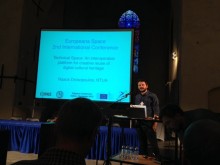
Represented by the gracious cornflower, the national symbol of Estonia, the II Europeana Space International Conference took place in Tallinn on 10-11 December 2015. This event, organized by the Estonian Ministry of Culture, intended to generate new perspectives for the wider … Continue reading
CIVIC EPISTEMOLOGIES project celebrated its end in November 2015 with the Final Conference in Berlin. As main legacy, the project, in conjunction with the RICHES project, proposed the adoption of the Berlin Charter… Continue reading
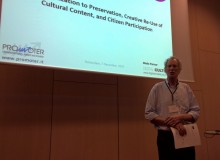
The CIVIC EPISTEMOLOGIES project is continuing to be disseminated worldwide also after the end of the funding period. DISH2015 conference is a perfect place for discussing the many challenges faced by cultural institutions, and the needs they have to make strategic … Continue reading

It is of the utmost importance that the context of change generated by the advent of digitization and digital technologies, and its implication on the society at large, are discussed in as many occasions as possible. DISH2015 conference is a … Continue reading
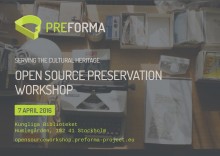
We warmly invite you to the Open Source Preservation Workshop – Serving the Cultural Heritage. The Workshop will offer attendees the opportunity to learn how to use the conformance checkers and to meet the community which has been established around these tools. Don’t miss this opportunity to get to know us! Continue reading
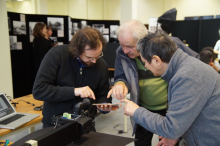
On Friday, November 27th the E-Space Photography Pilot in collaboration with the Leuven City Archive hosted the “Photographic Memories Workshop”. Seniors, students, citizens of Leuven and surrounding areas were invited to join for a voyage in time, through the stories … Continue reading