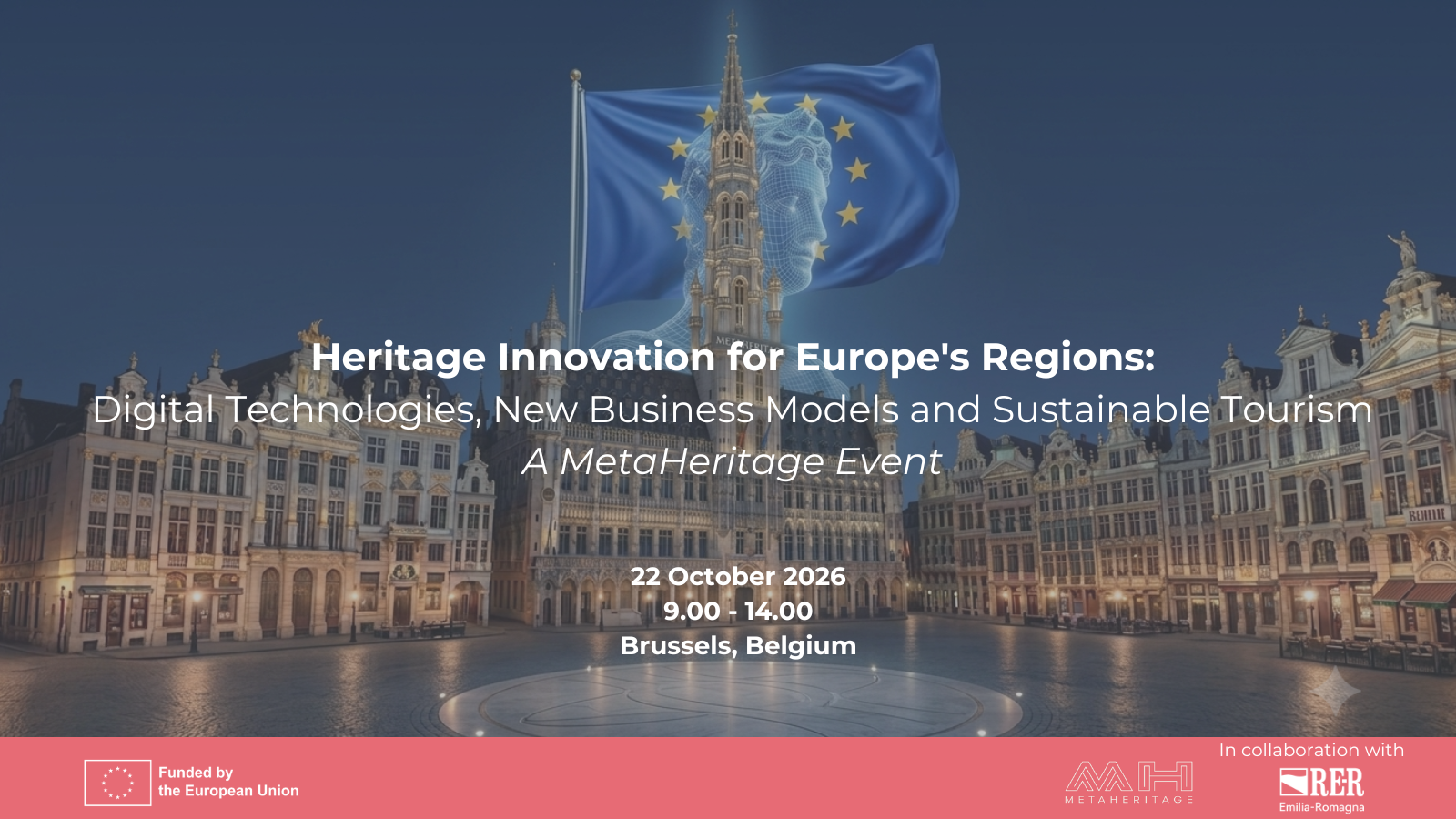

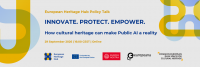
Join the European Heritage Hub to its upcoming Policy Talk, ‘INNOVATE. PROTECT. EMPOWER. How cultural heritage can make Public AI a reality’, taking place online on 29 September, from 16:00 to 18:00 CET. The Policy Talk will explore the vision … Continue reading
As cultural heritage increasingly moves into digital environments, professionals and organisations working with images and photographic collections face a range of challenges — from digitisation and data management to interoperability, access, reuse and the adoption of new technologies. In the context … Continue reading
Topic: digital preservation

The International Conference on Digital Preservation (iPRES) is a series of conferences on digital preservation. Since 2004, iPRES conferences have been held on three continents. iPRES 2015 will be held in Chapel Hill, North Carolina, USA on November 2-6, 2015. It will be held at the William and Ida Friday Center for Continuing Education. Continue reading
The EuropeanaPhotography project ended 31st of January 2015. To mark the occasion, we organized a two-day conference in Leuven on Thursday 29 and Friday 30th of January, under the theme “The Impact of Digitization on Photographic Heritage: Memories Reframed“. Continue reading
Speakers: Sarah Whatley (Coventry University, project’s coordinator), Charlotte Waelde (University of Exeter), Prodromos Tsiavos (Postscriptum), Frederik Temmermans, Peter Schelkens, Ann Dooms (iMinds). A workshop focused on IPR that considers content rights in a non traditional way. Rather than only focussing on different … Continue reading
The 10th International Digital Curation Conference was held from Monday 9 February to Thursday 12 February 2015 in London. This year’s theme was “Ten years back, ten years forward: achievements, lessons and the future for digital curation”. Continue reading
Important appointments organized by Europeana Space project in March 2015! The objective of Europeana Space is to increase and enhance the creative industries’ safe use of digital cultural content available in online repositories, by delivering a range of resources to … Continue reading
A Memorandum of Understanding has been signed between the two EU funded projects to look for new possibilities and funding to exploit the results of the two projects in joint initiatives, at European and national level, around the theme of digital preservation. Continue reading
In adopting the concept of “migration” as paradigm of modernity, the MeLa project investigated the role of museums within the contemporary socio-cultural context, in order to identify new practises, tools and ways of representation and consumption able to foster an updated idea of museum, as space for dialogue and social cohesion in a transcultural Europe. This event was aimed at providing a critical overview on the main findings ensuing from the project’s investigations and a forward-looking discussion about the future of European museums. Continue reading
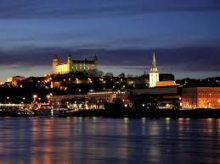
Focus of the plenary was the finalization of the +430.000 metadata of early photographs to be provided to Europeana.eu, the European digital library where the images digitizited by the project will be retrievable and accessible to everybody, and the organization of the final conference of the project, which will be joint to the opening of a new edition of the exhibition All Our Yesterdays, with a very special Belgian flavour that was added to the original format of the exhibition (held in Pisa in April-June 2014 for the first time) thanks to the cooperation with the Leuven City Archive. Continue reading
Erik Buelinckx from the Royal Institute for Cultural Heritage presented the project at the monthly meeting of the follow-up committee of the Belgian Federal Policy digitisation program. Continue reading

In this issue we introduce the EUDAT License Wizard and ask what researchers think about open data, before having a look back at some of the achievements over the course of the year. Continue reading