


Unleashing the power of data-driven tourism

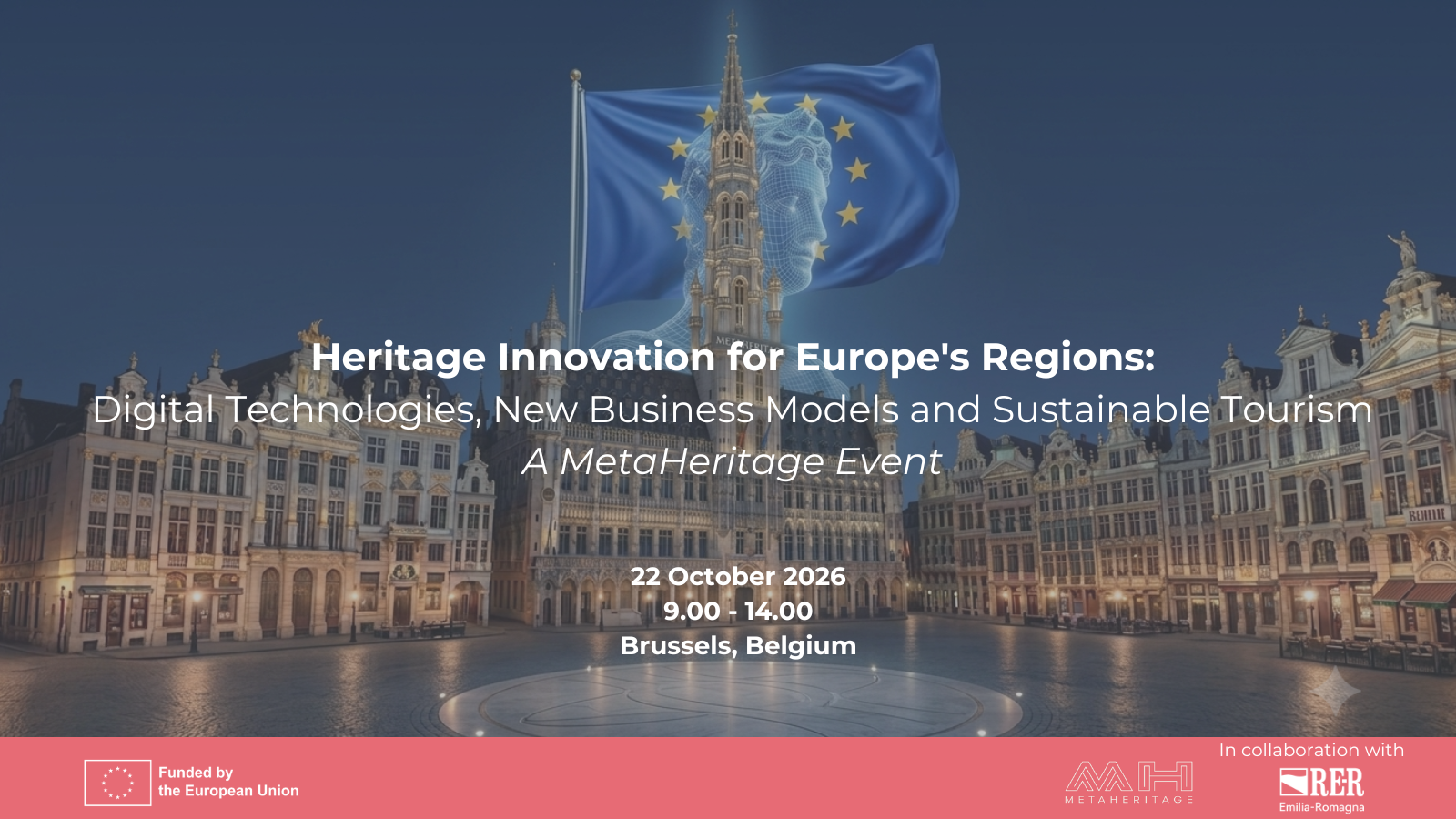
On Friday 22 September, 2023, PwC will organise an event, “Unleashing the power of data-driven tourism“, featuring Amazon Web Services (AWS), to inspire and create synergies between different stakeholders to unleash the power of data and accelerate data pooling and data sharing in the tourism sector.

The goals of the event is to highlight the benefits of a tourism data space, present the technologies that can enable secure and trustworthy exchanges of data in the tourism sector, and bring relevant actors together to discuss and operationalise concrete use cases through engaging collaborations that are expected to emerge from this event.

It is expected to be of interest to those working at the intersection of cultural heritage and tourism.

To attend the event, registration is mandatory.
To read more about the event and to register, follow this link.


Dreaming of AI: Perspectives on AI Use in Cultural Heritage

image from BPOC website.

The Balboa Park Online Collaborative (BPOC) hosted a new episode of its free ‘Dreaming of’ webinar series, Dreaming of AI: Perspectives on AI Use in Cultural Heritage, on September 29th at 5PM CEST/8 AM PT/11 AM ET

Attendees joined Nik HoneysettJack Ludden, and Alexandra Kron-Daleo from the BPOC Team with Jeff Steward from Harvard Art Museums in a friendly discussion on and off camera to talk about our experiences with AI.

Along with this webinar, BPOC is surveying AI use in cultural heritage.
We would love to hear from you whether you currently use AI tools or not. Please take a few minutes to complete the survey: https://forms.gle/JiDKNa1xDs9CFtGF9


The History of 3D digitisation – a new blogpost on Europeana

img. from Europeana website

As part of the EUreka3D project, a blogpost authored by John Balean on behalf of Photoconsortium was recently published on Europeana.

In the blogpost, a brief history of 3D and 3D digitisation gets addressed, starting from a cartoon by Roland Emett from Punch Magazine in 1953. The narration goes through different hisotrical periods and locations, from Ancient Greece to the present day, and it’s an occasion to reflect on the value of 3D throughout history – and the one it has today, and how it will affect the future of digitisation.

Read the blogpost here.


eu emblemEUreka3D project is co-financed by the Digital Europe Programme of the European Union.


EUreka3D partecipating in EuropeanaTech 2023

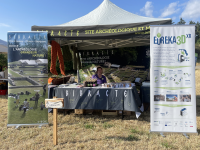
EUreka3D project, coordinated by Photoconsortium, will be hosted at the conference, that will take place from 10 to 12 October 2023. The project will be showcased through a video presentation, currently in preparation, and the partecipation of EGI and their exhibition booth.

This opportunity will be crucial to disseminate EUreka3D work, progress and service to the community of professionals, technical providers and other stakeholders operating in the cultural and creative sector.

Europeana Tech is a conference aimed to all tech-minded professionals, developers, researchers and students working in and around digital cultural heritage across the globe: it’s an opportunity to meet with, learn from and work with collegues from all around Europe, exploring the challenges and opportunities that AI and 3D bring to the sector.


Citizen Heritage presents “Citizen Heritage 101”, a series of educational videos on the project scopes and topics

Citizen Heritage is an Erasmus+ Project that aims to provide Higher Education Institutions with new insights and opportunities to include Citizen Science teaching and learning activities for social purposes into their curricula, in order to offer a selection of good practices on how to benefit from the knowledge circulation in and outside academia and how to adopt a more vibrant role in civil society.

“Citizen Heritage 101” is a serie of six educational videos, coordinated by the partner Erasmus University Rotterdam and produced by the students themselves, which purpose is to enrich the curricula and experiences of university students in this domain, who will be the cultural heritage professionals of the future.

Check out “Citizen Heritage 101” on Photoconsortium YouTube channel.


Updates on the theatrical performances narrating the stories of San Pellegrino in Alpe

images courtesy of University of Pisa


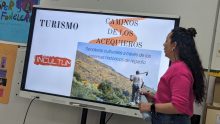
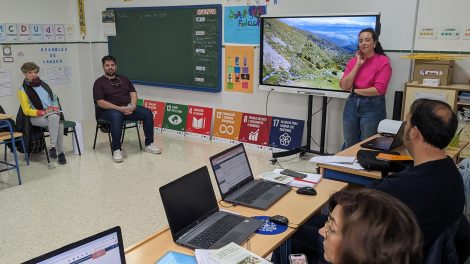
The summer performance season in San Pellegrino in Alpe, in the municipality of Castiglione di Garfagnana, opened on 25 June 2023. This is part of the programme for cultural tourism promotion of the INCULTUM Pilot 5 in Garfagnana (Tuscany).

The series of four theatrical performances that has taken place between June and August was held in the rooms of the Don Luigi Pellegrini Ethnographic Museum, which were set up especially for the occasion. The actress Elisabetta Salvatori narrates the museum’s exhibits and its incredible history through her performance ‘A priest, two saints, a border and 4000 unique pieces

This serie of performances were the first ever to take place directly inside the museum, and many of the spectators praised the suggestiveness of the combination of the actress’s words and the fact that they were in the museum rooms.

The last two shows were held on the 30th July and 6th August, and the last summer date is scheduled for the 3rd of September, and both of them were a success: visitors were numerous, and all the seats made available on the fresco hall on the second floor were occupied.


The show on the 6th of August was also attended by the pilot coordinator for the University of Pisa, Professor Enrica Lemmi, who introduced actress Elisabetta Salvatori’s performance by talking about the progress of the INCULTUM project and what has been achieved so far.

The last show will be held on the 3rd of September 2023.

Download the posters for the events – PDF 4.7 Mb


New multimedia installation has been placed in the San Pellegrino in Alpe Museum

Text and images courtesy of University of Pisa

Inside the San Pellegrino in Alpe Museum, a multimedia installation has been created, to be followed by others, with the aim of enhancing the exhibits and making the visiting experience more immersive and accessible for the user. In fact, through user-selectable audio and video content, it will be possible to delve into the contexts of use of the objects housed in the museum.
The installation consists of a small wooden container structure (the shape and size of which will be developed taking into account the space available inside the museum), a device for audio (speakers) and video (screen) playback, and a reading system designed to scan tags that can simply be ‘placed’ on top of the structure.
The equipment has an extremely intuitive and immediate use. To accompany the main installation, small ‘framed’ prints will be added, depicting the rooms of the museum. By placing the small frame on the appropriate holder, the tag player will immediately play an audio-video file of 1-2 minutes in length, related precisely to the theme chosen to be explored.

The installation was received with interest and curiosity by the visitors: in fact, both adults and children appreciated the intuitiveness of the instrumentation, without forgetting the informative contribution.

To discover more about the installation, you can download this file (italian language, PDF, 537 KB)


“Dream Space” presented by exhibition platform Chimera

img. courtesy: Chimera Platform

Chimera is a female-run virtual exhibition platform and art agency, and currently its focus is on game engines and metaverses.

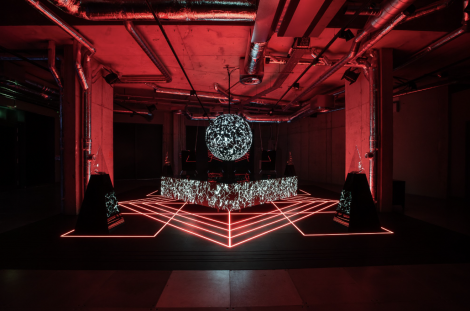
Chimera is glad to present their latest gamified solo project “Dream Space” by visual artist and sculptor Nata Drachinskaya and curated by Anastasia Ustrugova.

The exhibition opened on the 22nd of August, and offers a narrative on how to rebuild life after trauma: in order to cope with the related emotions and feelings, the artist has built a space referencing a lucid dream, consisting in a type of dream in which the person is in control.

Visit the exhibition here.

For more information, download this file (PDF, 3 MB).


Radio interview on INCULTUM Ireland partner work in Carr’s Hill cemetery

LiDAR analysis by Dr Steve Davis of TII dataset showing probable grave patterns in Carr’s Hill


John Tierney, the INCULTUM pilot coorinator from Ireland, was interviewed with their national broadcaster, Raidió Teilifís Éireann (RTÉ). At this link it’s possibile to find the transcription of the interview, during which was discussed their recent work in Carr’s Hill cemetery.

INCULTUM Ireland pilot aims at promoting the online project Historic Graves, that transcripts online memorial epitaphs and offers training workshops to local communities interested in contributing to surveying and transcribing historic graveyards.


Digital Hermeneutics II: Sources, Analysis, Interpretation, Annotation, and Curation

CALL FOR PAPERS

Digitization has reached almost all areas of science and scholarship. And even in the cultural sciences and humanities, computers, databases and digital tools are increasingly important. Last year‘s annual conference „Digital Hermeneutics: Machines, Procedures, Meaning“ of the research cluster digital_culture dealt with the theoretical and conceptual challenges inherent in hermeneutic methods, tools, and applications. The results of the conference supported understanding and meaning, when algorithms, programs, machines, and other technical procedures contribute to it.

Following up on these initial theoretical and conceptual results, we now want to address more technical aspects of methods, technologies, tools, and applications supporting Digital Hermeneutics under the title „Digital Hermeneutics II: Sources, Analysis, Interpretation, Annotation, Curation“ and take a look at digitally supported hermeneutic research processes and anticipate the future of digitized working practices in the cultural sciences and humanities.

Without such digital support systems, it will no longer be possible to index, find, annotate, and curate the ever-growing number of digitally available resources for research data. Digital systems are also already in use for analyzing, indexing, enriching, and annotating multimedia data. But what about systems that support the analysis, annotation, and interpretation of digital research data – thus: representation of hermeneutic methods – and their results as well as supporting machine learning, reasoning, and finally automating the documentation of annotation, interpretation, and understanding?

TOPICS OF INTEREST
In an exchange between humanities scholars and computer scientists, we want to explore the possibilities and limits of the vision of digitally supported hermeneutics. The following questions should be understood as suggestions for contributions:

  • Digitization processes bear the risk of information loss or structural shifts and biases. How can these risks be dealt with?
  • The transformation of sources to data involves coding and enables the enrichment with information. How does one deal with the loss of the original source characteristics? Do standardizations promote a focus on unifying features of different sources or can nuances and deviations also be mapped?
  • Do the questions and epistemological interests of humanities, cultural studies, and social sciences change the availability, quality, and quantity of sources in the form of data?
  • How can algorithms and tools support, possibly even expand, research questions and epistemological interests in the humanities, cultural studies, and social sciences?
  • Can computer science also benefit from the discussion of methods in the humanities, social sciences, and cultural studies?

Abstract (Position Paper, max. 500 words, please submit to dennis.moebus@fernuni-hagen.de)

Submission deadline: 15th September 2023

Download the Call for Papers adn Workshop details (PDF, 250 Kb)