The China You Don’t Expect

img. courtesy: Claudio Francesconi

Two certainties run through our existence: death, and the presence of the Fibonacci sequence in everything around us. Leonardo Fibonacci from Pisa gave the world a mathematical principle that forever reshaped how we read nature, form and growth. Why this sequence — and its golden offspring, PHI — matters so deeply is a question that has occupied centuries of study, but this article looks elsewhere: at what Fibonacci’s thought has generated within the visual arts, and how it continues to offer an unexpected bridge between distant cultures.

For far too long, we’ve opposed rationality and emotion, science and poetry, reducing art to a domain detached from mathematics. This romanticised divide has obscured entire artistic genealogies built precisely on order, proportion, optics and geometry. From the Renaissance to the twentieth-century avant-gardes, from kinetic experiments to perceptual research, scientific rigour has never been alien to creativity — it has simply been pushed to the margins of mainstream narrative.

Today those margins no longer exist. Digital art, transmedial practices and the rise of Artificial Intelligence have turned mathematics into an everyday language of contemporary creation. Computational tools, once the territory of specialists, are now accessible to anyone with an idea and a piece of software. The result is a moment in which visual traditions overlap without clashing, finding in mathematics a shared, global ground that anyone can read.

The Fibonacci sequence is everywhere: in flowers, in urban patterns, in biological systems, in human-made structures. Its ubiquity led me to imagine a show that would truly test its universal character — inviting artists from distant backgrounds to confront the same primordial structure. To celebrate Fibonacci Day in Pisa, I selected several international artists, including two from China — a choice that may seem unusual in a West that still perceives China as distant from contemporary artistic and technological culture. The truth is that we know very little about China’s current art scene, and what we do know is often filtered through outdated ideas.

It is in this perceptual void that the work of Zhang Nan and Duan Yike emerges — two artists who approached Fibonacci from radically different traditions, imaginaries and conceptual frameworks.

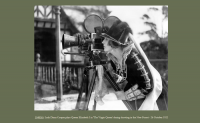
Zhang Nan’s Form Beyond Boundaries demonstrates how the golden spiral transcends any cultural ownership. It is not a citation but a narrative detonator. The spiral contracts into a primordial core, then bursts into geometric fragments advancing with a precise, almost musical rhythm. On one side it recalls Western traditions of proportion; on the other it resonates with Eastern notions of balance and generative forces. As the sequence progresses, the form collapses and regenerates, shifting from material to immaterial states: the mathematics remains, but transforms, like a living principle. The work merges geometry and philosophy, perception and metaphysics — revealing what it truly means to conceive art as a global territory.

Duan Yike’s The Spiral of Timeless Murals begins instead with the Dunhuang mural motifs, reinterpreting them through cyclical structures, proportions and spirals aligned with Fibonacci logic. Time is no longer linear: it becomes movement, return, stratification. Mathematics serves not as ornament but as the conceptual scaffolding that allows tradition to be reconstructed and transformed through digital patterns. Dunhuang is not “modernised”: it is read as a complex, natural system built on the same principles that govern growth and universal harmony. The work becomes a bridge between eras, technologies and cultures, reaffirming that what repeats in nature also repeats in human imagination.

From these works emerges a China the West rarely sees: not a monolithic ideology, but an artistic scene capable of engaging with universal codes with striking clarity. A China that knows its past but refuses to be constrained by it; that reads Fibonacci not as a borrowed tool but as a framework to rethink itself. A China that experiments, interprets and innovates.

And if this exhibition offers one lesson, it is straightforward: when you work with structures that belong to everyone — spirals, proportions, cycles, algorithms — the distinction between “centre” and “periphery” collapses. China stops being an elsewhere to decode and becomes a central actor, fully embedded in the global conversation. Fibonacci, once again, reminds us that growth is never linear: it arrives from unexpected directions, opens lateral paths, overturns inherited assumptions.

This is the China you don’t expect. And one we should finally start looking at for what it truly is.


SEMIC Conference 2025

On 25 and 26 November, it will be possible to follow SEMIC 2025 remotely and be part of the European Commission’s flagship event on semantic interoperability and digital government, organised in partnership with the Danish Presidency of the Council of the EU.

With the theme “Interoperability for Impact,” SEMIC 2025 will explore how shared data, semantics, AI and governance models can turn policy goals into concrete benefits for citizens, businesses and administrations.

By registering for the live stream, participants will be able to:

  • Follow the technical workshops on 25 November, including sessions on semantics in data spaces, AI for digital ready policymaking and real-world cross border use cases.
  • Watch the main conference on 26 November, featuring high level discussions on harmonised standards, digital sovereignty, the evolution of the European Interoperability Framework (EIF), our Public Sector Tech Watch’s Awards ceremony and more.
  • Get inspired by concrete examples and strategies that support a more open, interoperable and digital public sector in Europe!

Register now and become part of the European Commission’s flagship event on semantics, interoperability, and digital government!


Culture Matters Here. Cultivating Creative Place-based Innovation in Non-urban Communities

The IN SITU project celebrates its Final Conference in Valmiera (Latvia) from 11 to 13 May 2026.

Extended deadline: The deadline for the Call for Papers for the Special Issue Proposal in the International Journal of Cultural Policy has been extended to 15 December 2025.


The conference will be a dynamic forum for exploring cutting-edge research and practices in place-based innovation and creativity of the cultural and creative industries (CCIs) in non-urban areas.

Because of the focus on innovative and sustainable cultural and creative practices in remote areas and peripheral corners of Europe, the themes addressed in the conference resonate many of the subjects that are studied in SECreTOUR project.

The IN SITU project invites proposals for presentations of papers and projects from a diverse range of individuals, including scholars, researchers, artists, cultural practitioners, activists, policymakers and decision-makers from across the world and a broad range of disciplines.

The deadline for submitting proposals of presentations has been extended to 15 December 2025. The submission is expected to be delivered online through the e-form made available on the IN SITU website.

The presentations are expected to demonstrate the transformative power of the creative and cultural sector in forging more equitable and sustainable communities in rural and non-urban areas by:

  • Strengthening cultural and creative practice and place-based innovation
  • Fostering cross-sectoral collaboration and partnerships for local benefit
  • Advancing planning and policy frameworks for creative work in non-urban areas

We are expecting that the outcomes of the Conference will provide relevant insights in the research conducted by SECreTOUR.


SECreTOUR is a research and innovation action funded under the Horizon Europe Programme of the EU.

Follow SECreTour online also on the SECreTour project’s website.


LIVE NOW: “3D digitisation: Prepare for Success” training course

The common European data space for cultural heritage is developing training resources on various themes, to support cultural institutions in building capacity for the new challenges they are facing in innovating and modernizing their workflows in the digital realm. EUreka3D project’s coordinator PHOTOCONSORTIUM, as part of the project’s support to the data space, has finally published an online course that will help build the basics about 3D digitization projects: 3D digitisation: Steps to success.

The course is designed to help anyone on their 3D digitisation journey, and it’s specifically aimed at Cultural Heritage professionals (for instance – museums, public administrations, monuments or sites, stakeholders) who are considering, or are in the middle of, digitising their cultural heritage collections using three dimensional models. The course is based on the 3D Digitisation Guidelines, a guide based on the EU VIGIE2020/654 study on quality in 3D digitisation of tangible cultural heritage, in the hope of giving helpful insights, advices and best practices around the pratice of 3D digitisation.

The course is self paced, based on the learner’s response and is for everyone: additional resources are also available if needed.

Enroll in the course at this link.


eu emblemEUreka3D-XR project is co-financed by the Digital Europe Programme of the European Union.


Applicants Announced for the Online Training Programme “Driving Digital Transformation in Cultural Heritage Institutions”

We’re delighted to announce the successful applicants for the 2025 Online Training Programme “Driving Digital Transformation in Cultural Heritage Institutions”, organized by EUreka3D‑XR Project in collaboration with the International Council on Archives (ICA) and Photoconsortium.

After a competitive selection process, 30 learners have been selected to join the full programme and will engage in three sessions, designed to deepen their knowledge of digital strategies and practices in the heritage sector. Each session will comprise an open keynote speech, livestreamed for all public, and an interactive working session for the selected cohort: attendants of the three interactive sessions will receive a certificate of participation.

We extend our sincere thanks to the over 160 CH professionals and students who applied— your enthusiasm and commitment to advancing digital transformation in cultural heritage are highly valued. Unfortunately, due to the limited number of places (30 selected learners), we were unable to accommodate all applicants this time. In any case, the keynote lessons of each session will be available open to all, via streaming on the ICA YouTube channel and will be recorded for rewatching and reuse. Whether you applied and were not selected, or you are simply interested in following the presentations and dialogues, you are warmly invited to tune in and engage.


Wednesday, 19 Nov 2025 h. 15:00–17:00 CET
Heritage Policies and Strategies for the Digital Transformation of Practices
Keynote by Antonella Fresa – The session will explore European policies, strategic visions and infrastructures underlying digital cultural heritage
Live streaming: https://www.youtube.com/watch?v=r_f3GCcFGKI

Wednesday, 26 Nov 2025 h. 15:00–17:00 CET
The Impact and Transformative Power of Digital Cultural Heritage
Keynotes by Fred Truyen (KU Leuven) & David Iglésias Franch (CRDI – Ajuntament de Girona) – Focus on case-studies and the practical and societal implications of digital heritage innovation
Live streaming: https://www.youtube.com/watch?v=BhqL4n2GvJ0

Wednesday, 3 Dec 2025 h. 15:00–17:00 CET
Good Practices and Experiences for Creation, Access and Re-use
Keynotes by Frederik Temmermans (VUB – imec) & Eirini Kaldeli (NTUA) – A co-creation interactive session based on use-case scenarios for creation, access and re-use of cultural assets
Live streaming: https://www.youtube.com/watch?v=ObuhHUDxzVk


About the Programme

The 2025 Online Training Programme builds on the previous webinar series organised in 2023–2024 and seeks to provide cultural heritage professionals with advanced knowledge and applied methodologies in digital transformation.

Through this initiative ICA, EUreka3D-XR and Photoconsortium aim to support heritage institutions in addressing policy implications, strategic frameworks, practice-based innovation and reuse of digital cultural heritage.


eu emblemEUreka3D-XR project is co-financed by the Digital Europe Programme of the European Union.


Q&A Session for the Outreach Synergy Call

The Q&A Session for the Outreach Synergy Call will take place online on 17 November 2025 from 1:00–2:00 PM CET.

The session will introduce the Outreach Synergy Call, a funding opportunity designed to support new and creative uses of 3D cultural heritage data and tools. Participants will also have the chance to explore the innovative tools developed by the consortium: the Rooom XR Viewer, PCSS (DLibra) 3DViewer, and the 4D Viewer by the University of Jena.

Registration: Explore the 3DBigDataSpace Tools and the Outreach Synergy Call : Time Machine Europe


EUreka3D-XR supports ‘Twin It! Part II’ campaign

EUreka3D initiative, supporting the common European data space for cultural heritage, is fully on board with the new Twin it! Part II campaign organized by the Europeana Foundation and the European Commission.

The campaign, building on the successes achieved in 2024, aims to further support EU Member States in their 3D digitisation and preservation efforts — now with a sharper focus on how the digitised assets will be used, to unlock the power of 3D digitisation by driving meaningful reuse across sectors, expanding the reach and impact of cultural data, and boosting innovation and competitiveness across the cultural heritage ecosystem.

As openly accesible resources available to all CH professionals, EUreka3D developed tools, training and documentation, in particular:

  • the EUreka3D Data Hub, a EU-based platform for safe storage, management and sharing of 3D assets,
  • the Step to Success digitization guidelines, derived from the EU VIGIE Study 2020/654.
  • the self-paced course on Europeana Training Platform “3D digitisation: prepare for success“, to help anyone on their 3D digitisation journey, specifically aimed at Cultural Heritage professionals who are considering, or in the middle of, digitising their cultural heritage collections using three dimensional models.

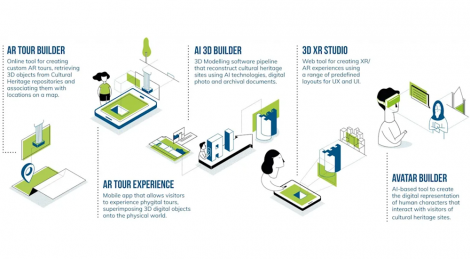
Additionally, the most recent developments of the project in the realm of XR tools will be soon available for the entire CH community, offering for reuse 5 tools for XR creation and 3 demonstration scenarios in France, Spain and Cyprus.


eu emblemEUreka3D-XR project is co-financed by the Digital Europe Programme of the European Union. 


Discover the history of the walls of Girona

The story of Girona is the story of its walls – built in Roman times, altered in the Middle Ages, and demolished in the 19th and 20th centuries. Now the walls are being virtually reconstructed in 3D by the EUreka3D-XR project.

Go read the blogpost on Europeana, written by CRDI – Ajuntament de Girona, at this link.


eu emblemEUreka3D-XR project is co-financed by the Digital Europe Programme of the European Union. 


Languages & The Media 2026: “Moving Images That Move Audiences: Localising with Intent”

Languages & The Media, the Biennial International Conference on Audiovisual Language Transfer in the Media, is gearing up for its 16th edition, scheduled from November 4 to 6,  2026, at Senate House, University of London, UK.

Under the theme Moving Images That Move Audiences: Localising with Intent, Languages & The Media 2026 will explore the real impact of localisation and accessibility on storytelling, audience engagement, and cultural exchange. In a moment of rapid change and technological disruption, this anniversary edition will provide space to reflect on some of the defining questions of the their industry:

  • What is the core purpose?
  • Is it possible balance speed, scale, and quality?
  • What roles should human creativity and emerging technologies play in the future of media localisation?

The event will be anticipated by three days of pre-conference workshops, expert panels, pioneering research, and essential networking, as bringing together content creators, broadcasters, translators, subtitlers, dubbing professionals, accessibility advocates, language service providers, professional associations, educators, researchers, and technology developers.


SECreTOUR Beyond Borders: a very successful event

The SECreTOUR initiatives named Beyond Borders run successfully from 22 to 25 October 2025.

On the first day (22/10/2025), the partners of SECreTOUR met with representives of the sister projects that participate in the Cluster: CULTURALITY, CROCUS and TOURAL to discuss and plan the next joint events in 2026-2027 and to address the key question of the sustainability of their network.

Cluster meeting: SECreTOUR, CULTURALITY, CROCUS and TOURAL

The day was completed in the evening with a very interesting presentation of the case of Planhotel Resorts and Hotels on the theme of “Food, Tourism and Hospitality: how do they fit together”.

Keynote: “Food, Tourism and Hopitality: how do they fit together” by Sara Rosso Cipollini and Carmine Garzia

On the second day (23/10/2025), the public workshop on Cross-Border Collaboration and Macro-Regions for Cultural Tourism was held at the Swiss Diamond Hotel “La Romantica”, member of the SECreTOUR Network of Common Interest and organiser of the SECreTOUR Botanical Garden ispired by the rich biodiversity of Monte San Giorgio.

SECreTOUR Botanical Garden at Swiss Diamond Hotel, Meride

The wonderful location was made available to host a very successful meeting where projects’ partners, international institutions, policy makers and local stakeholders presented their views about sustainable tourism in rural destinations and the challenges of cross-border promotion.

Prof. Lorenzo Cantoni of USI is opening the SECreTOUR workshop


On the third day (24/10/2025), the participants in the workshop visited the sites of the Monte San Giorgio SECreTOUR pilot following the Miraculous Catch itinerary, developed through a crossing border path that started in Riva San Vitale and Meride (in Switzerland) to Porto Ceresio (in Italy), and eventually the arrived to Morcote (back to Switzerland).

Riva San Vitale

Historic houses in Meride

Starting of the trail from Meride to the top of Monte San Giorgio


On the border between Switzerland and Italy

Arrival to Morcote

The Municipality of Morcote, member of the SECreTOUR Network of Common Interest, hosted at the end of the day a lively encounter with local stakeholders where the integrated plan promoted by the Municipality was confronted with challenges and results connected with concrete innovative initiatives carried out by local enterprises.

Encounter with stakeholders hosted by the Municipality of Morcote

On the fourth day (25/10/2025), the Beyond Borders Hackathon took place in Lugano, organised by SECreTOUR in collaboration with Europeana, Photoconsortium International Association, the UNESCO Chair of the Università della Svizzera Italiana in ICT to develop and promote sustainable tourism in World Heritage Sites and the UNESCO Chair of the University of Genoa in Anthropology of Health, Biosphere and Healing Systems, all members of the SECreTOUR Network of Common Interest. Two groups of students met with representatives of SECreTOUR partners and experts from USI to use the images taken from the europeana.eu platform to design new creative applications. In a few hours they were able to present to the appointed international Jury very interesting approaches, where physical and digital interactions have been proposed to promote cultural experiences in rural destinations.

Beyond Borders Hacakthon: participants, international jury members and organisers


SECreTOUR is a research and innovation action funded under the Horizon Europe Programme of the EU.

Follow SECreTour online also on the SECreTour project’s website.